A Life in Music
Childhood and study at Moscow Musical College/Moscow Conservatory
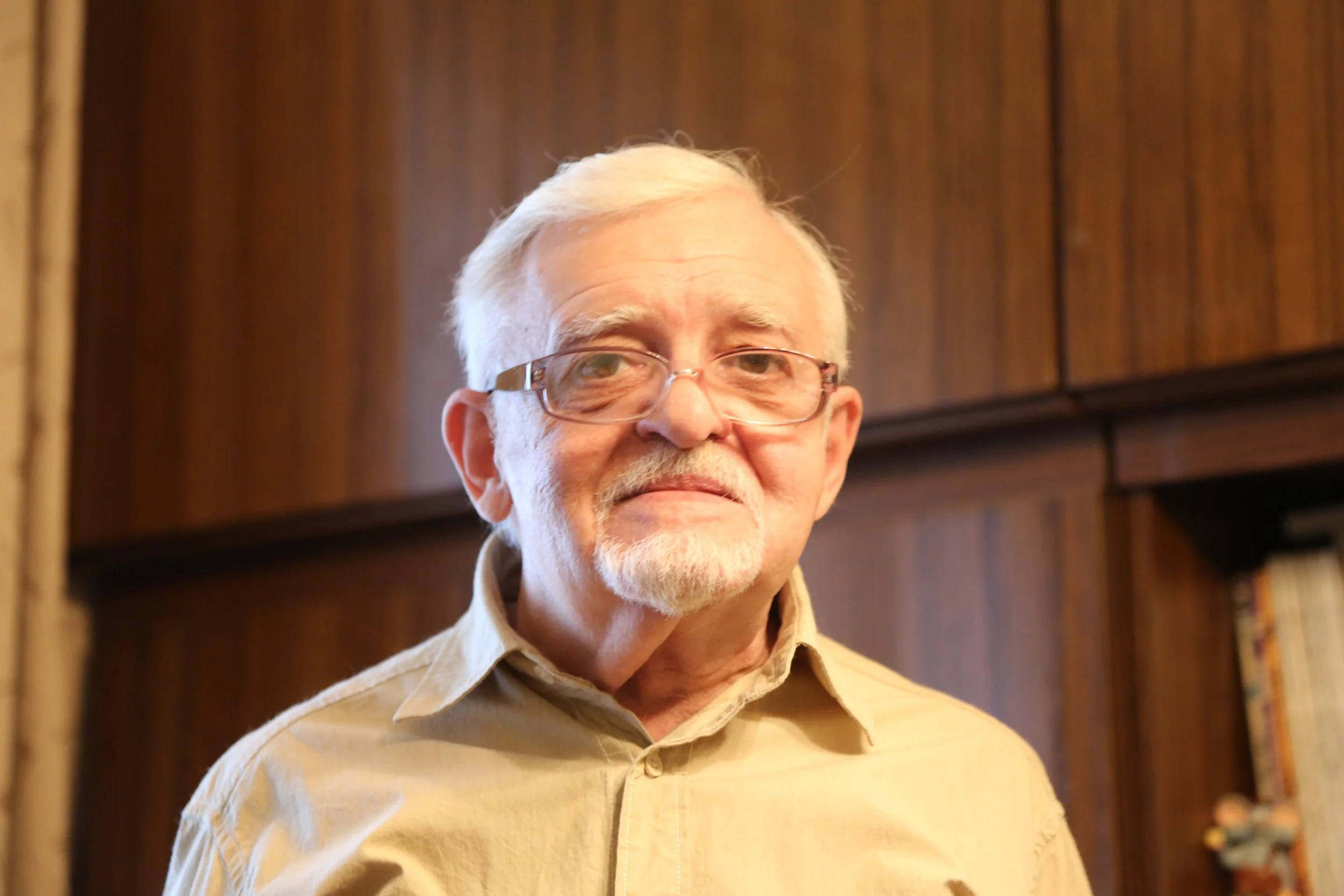
Nikolai Grigorievich Kapustin was born in Gorlovka, Ukraine on November 22, 1937. Returning home after being displaced by World War II, “Kolia” showed an early talent for music. At the age of only 14 he auditioned for and was accepted into the Moscow Musical College, the premier training school for young Russian musicians. At school, Kapustin studied with the respected teacher Avrelian Rubbakh. Rubbakh encouraged Kapustin in his composition, and it was during this time that Kapustin had a regular exposure to jazz - through the Voice of America Jazz Hour he listened to Oscar Peterson, Erroll Garner, the Duke Ellington Orchestra, the Glenn Miller Orchestra, and many other influential jazz pioneers.
In the fall of 1956, at 19 years old, Kapustin graduated from Moscow Musical College and enrolled in the Moscow Conservatory. He studied under the legendary pianist and teacher Alexander Goldenweiser. Kapustin rose to Goldenweiser’s strict standards and soon became one of his star pupils. However, he began to find his creative voice through composition, and it was during this time that he composed some of his earliest works. During Kapustin’s last year at the conservatory, he was given the opportunity to continue with postgraduate studies, but he was ready to forge his own path as a musician.
Oleg Lundstrem/Boris Karamyshev/Russian State Symphony Orchestra of Cinematography
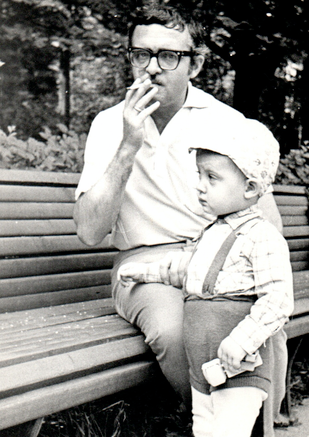
Shortly after graduating from the Moscow Conservatory, Kapustin joined Oleg Lundstrem and his famous jazz orchestra, with whom he would play for the next eleven years. It was with this group, with their jazz and popular repertoire and endless traveling and performing, that Kapustin cut his teeth as a jazz pianist. In addition to performing, he became the group’s resident composer and arranger, spending countless hours transcribing the music of Duke Ellington, Count Basie, Glenn Miller, and Stan Kenton, among many others. It was on tour with this group that Kapustin met his wife, Alla. They married on January 3, 1969 and in 1971 their first child, Anton Kapustin, was born.
In 1972, Kapustin left Lundstrem’s group and joined Boris Karamyshev’s orchestra, which gave Kapustin a chance to write for strings as well as big band. He continued a busy schedule of touring, arranging, and composing until Karamyshev’s orchestra was disbanded in 1977. Kapustin auditioned for and joined the Russian State Symphony Orchestra of Cinematography in 1977, where he would play piano for countless films produced by Soviet media. In 1978 his second son, Pavel, was born and in 1980 he gave his last public performance as a soloist - for the rest of his life, he would play only in studio recordings or in chamber groups.
Freelance Composer
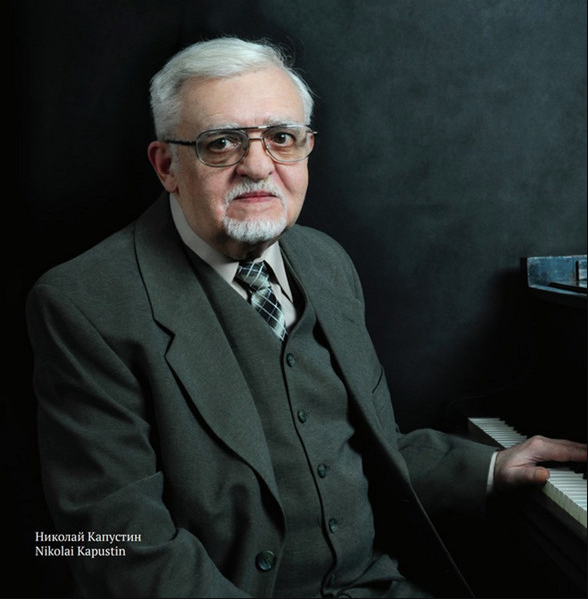
In 1983 Kapustin became a published composer for the first time with his composition Toccatina, Op. 36. The next year he resigned from the Russian State Orchestra of Cinematography to devote all his time to composing. It was during this time that he composed several seminal works, including his Eight Concert Etudes, Op. 40 (1984), Variations, Op. 41 (1984), and Twenty Four Preludes for Piano, Op. 53 (1988). He also began recording his works in the studio. Other pianists began to take note of Kapustin’s compositions. One of his biggest champions was renowned Russian pianist Nikolai Petrov, who began performing Kapustin’s Piano Sonata No. 2 and Piano Concerto No. 5. Kapustin traveled to London in 2000 to see Marc-André Hamelin give the western premiere of his Piano Sonata No. 2.
Legacy
Nikolai Kapustin passed away on July 2, 2020. He left behind 161 published works, each one original and wholly unique to his personal style. He is noted for using jazz style and written-out jazz “improvisations” within classical forms. His distinctive blend of jazz and classical music means he’ll long be remembered for his contributions to both of these genres. His music is currently seeing a resurgence in popularity, as fans and artists from around the world come together to celebrate his music and legacy.